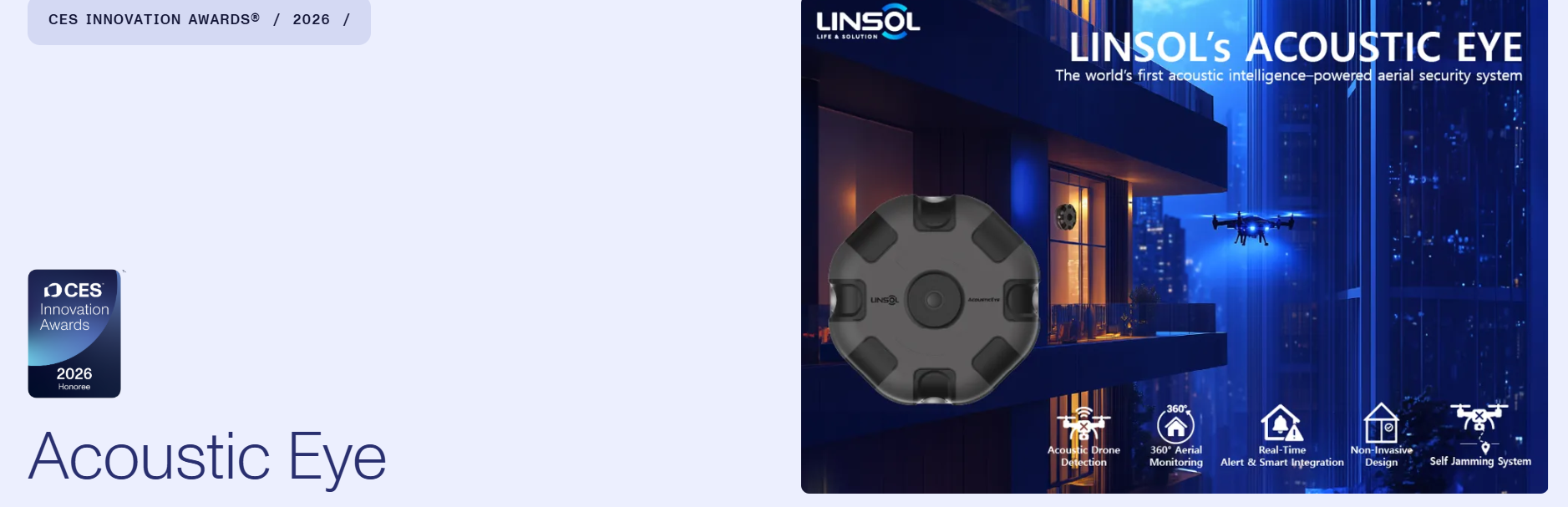

Introduction: When Sound Becomes Visible
What if we told you that sound could be seen, analyzed, and understood as clearly as an image on a screen? At the CES Innovation Awards 2026, one breakthrough concept captured the imagination of engineers, designers, and technology enthusiasts alike: Acoustic Eye. This award-winning innovation represents a bold step forward in how we interact with audio, spatial awareness, and intelligent sensing.
In this in-depth guide, we explore what makes Acoustic Eye a standout at CES 2026, why it matters, and how it could reshape industries ranging from consumer electronics to smart cities. We will unpack the technology, the vision behind it, real-world applications, and the broader implications for the future of audio-visual intelligence.
What Is Acoustic Eye? A Clear Overview
Understanding the Core Concept
At its heart, Acoustic Eye is a next-generation acoustic sensing system designed to visualize sound. Instead of treating audio as an invisible signal, Acoustic Eye transforms sound waves into spatial, interpretable data that humans and machines can understand instantly.
Why the Name “Acoustic Eye” Matters
Just as the human eye allows us to perceive light and depth, Acoustic Eye allows systems to perceive sound direction, intensity, and movement. It acts like a “vision system for audio,” offering situational awareness that goes far beyond traditional microphones.
CES Innovation Awards 2026: Why Acoustic Eye Stands Out
Recognition at the World’s Biggest Tech Stage
The CES Innovation Awards are known for celebrating technologies that push boundaries. Acoustic Eye earned its place by addressing a fundamental limitation in modern audio systems: the inability to contextualize sound in space.
Innovation Criteria That Acoustic Eye Meets
- Originality in sound visualization
- Practical usability across industries
- Forward-looking design aligned with AI and IoT
- Human-centric problem solving
The Technology Behind Acoustic Eye
Advanced Acoustic Sensing Architecture
Acoustic Eye relies on an array-based acoustic sensor design that captures sound from multiple directions simultaneously. This allows it to map sound sources in three-dimensional space.
Key Technical Principles
- Multi-point acoustic sampling
- Spatial sound triangulation
- Real-time signal processing
- Intelligent noise differentiation
AI-Driven Sound Interpretation
Artificial intelligence plays a critical role. Instead of merely recording audio, Acoustic Eye interprets patterns, identifies anomalies, and learns from environments over time.
How Acoustic Eye Visualizes Sound
Turning Audio Into Spatial Data
Acoustic Eye converts sound waves into visual representations, such as heatmaps or directional vectors. This makes complex acoustic environments instantly understandable.
Analogy: Like Radar, But for Sound
Think of Acoustic Eye as radar for audio. Just as radar shows aircraft positions, Acoustic Eye shows where sound originates, how it moves, and how it changes.
Design Philosophy: Built for Humans, Powered by Machines
User-Centric Interface Design
The system emphasizes clarity and simplicity. Visual outputs are intuitive, ensuring usability for professionals without deep audio engineering expertise.
Minimalism Meets Intelligence
Acoustic Eye avoids clutter. Its design reflects a belief that powerful technology should feel effortless to use.
Applications Across Industries
1. Smart Homes and Consumer Electronics
In smart homes, Acoustic Eye can:
- Detect unusual sounds like glass breaking
- Identify voice direction for better assistants
- Improve noise cancellation dynamically
2. Automotive and Mobility
In vehicles, Acoustic Eye enhances safety by:
- Locating emergency sirens accurately
- Monitoring cabin noise patterns
- Supporting autonomous driving awareness
3. Healthcare and Assisted Living
Acoustic Eye can monitor:
- Falls detected through sound anomalies
- Distress calls from patients
- Equipment noise irregularities
4. Industrial and Manufacturing Environments
Factories benefit from:
- Early fault detection
- Noise compliance monitoring
- Safer human-machine collaboration
Acoustic Eye and Smart Cities
Urban Sound Intelligence
Cities are noisy ecosystems. Acoustic Eye helps municipalities understand sound pollution, traffic patterns, and emergency events in real time.
Enhancing Public Safety
By pinpointing sound sources like accidents or alarms, response times can be dramatically reduced.
Privacy by Design: Addressing Key Concerns
Sound Without Surveillance
One of the most compelling aspects of Acoustic Eye is its focus on acoustic data, not voice content. It analyzes patterns, not conversations.
Built-In Ethical Safeguards
- No audio recording storage
- Pattern-based processing
- Compliance with global privacy standards
Comparison With Traditional Audio Systems
Why Microphones Alone Are No Longer Enough
Traditional microphones capture sound but lack spatial intelligence. Acoustic Eye adds context, direction, and meaning.
| Feature | Traditional Audio | Acoustic Eye |
|---|---|---|
| Directional Awareness | Limited | Advanced |
| AI Integration | Minimal | Deep |
| Visualization | None | Real-time |
| Adaptability | Static | Learning-based |